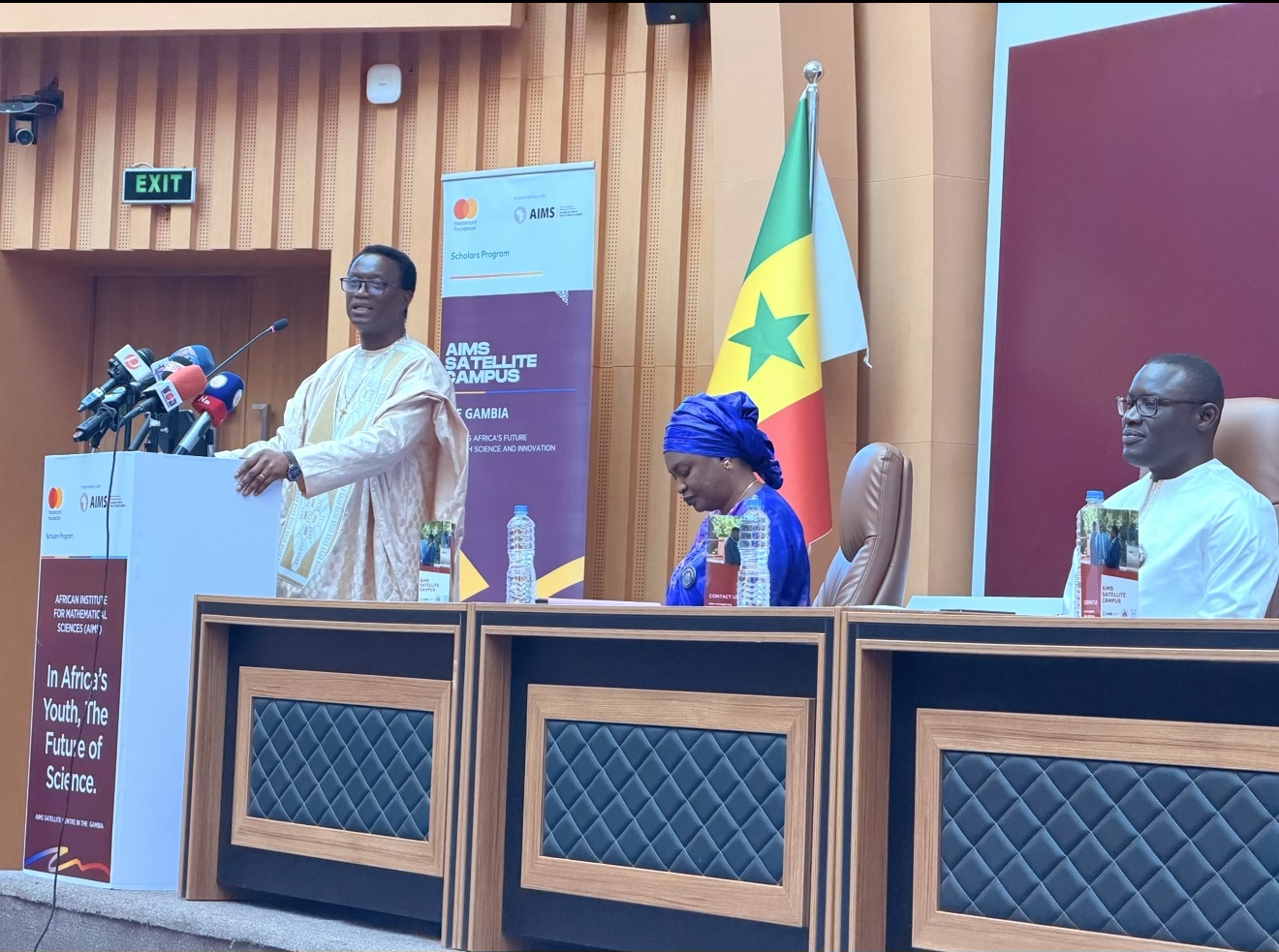
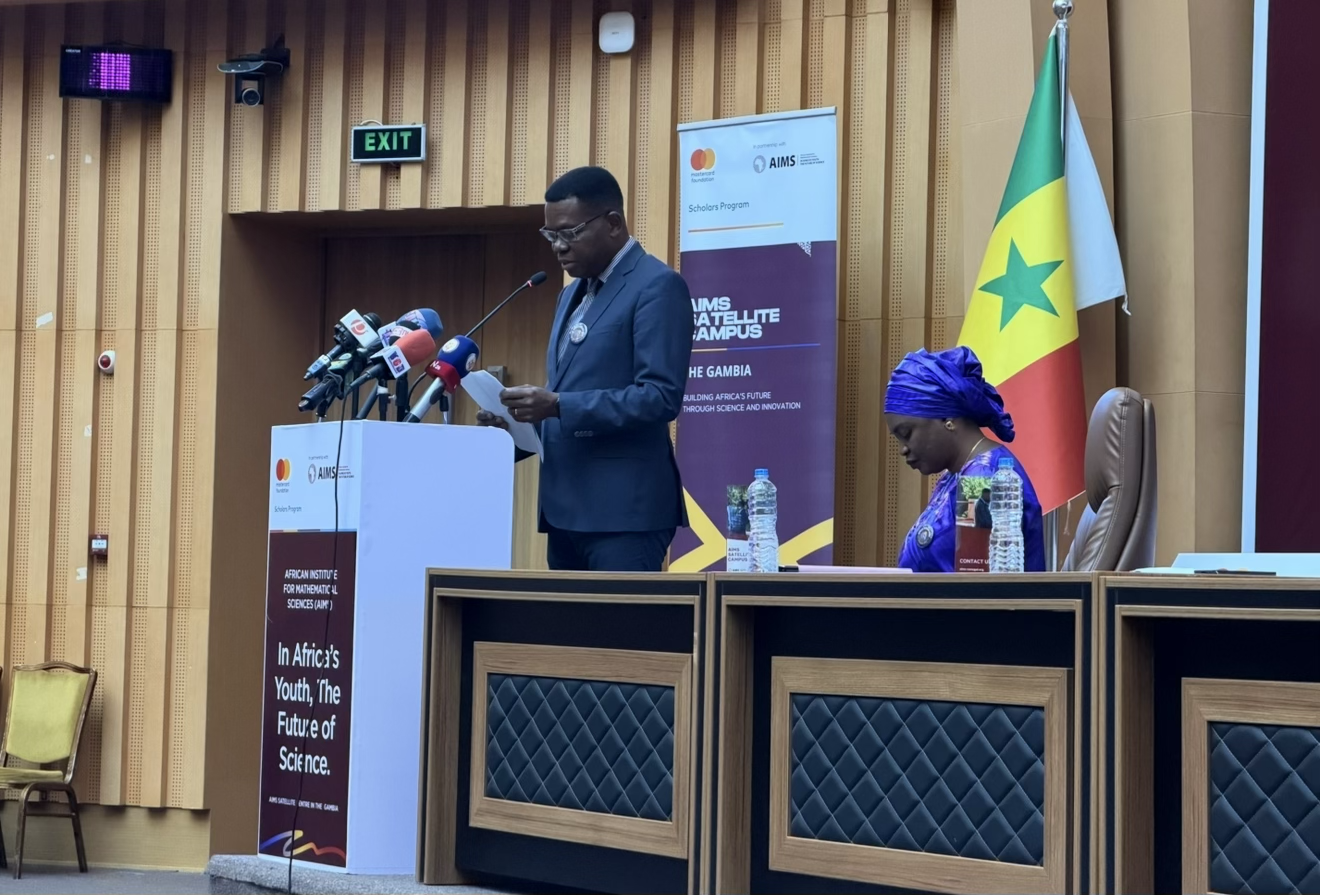
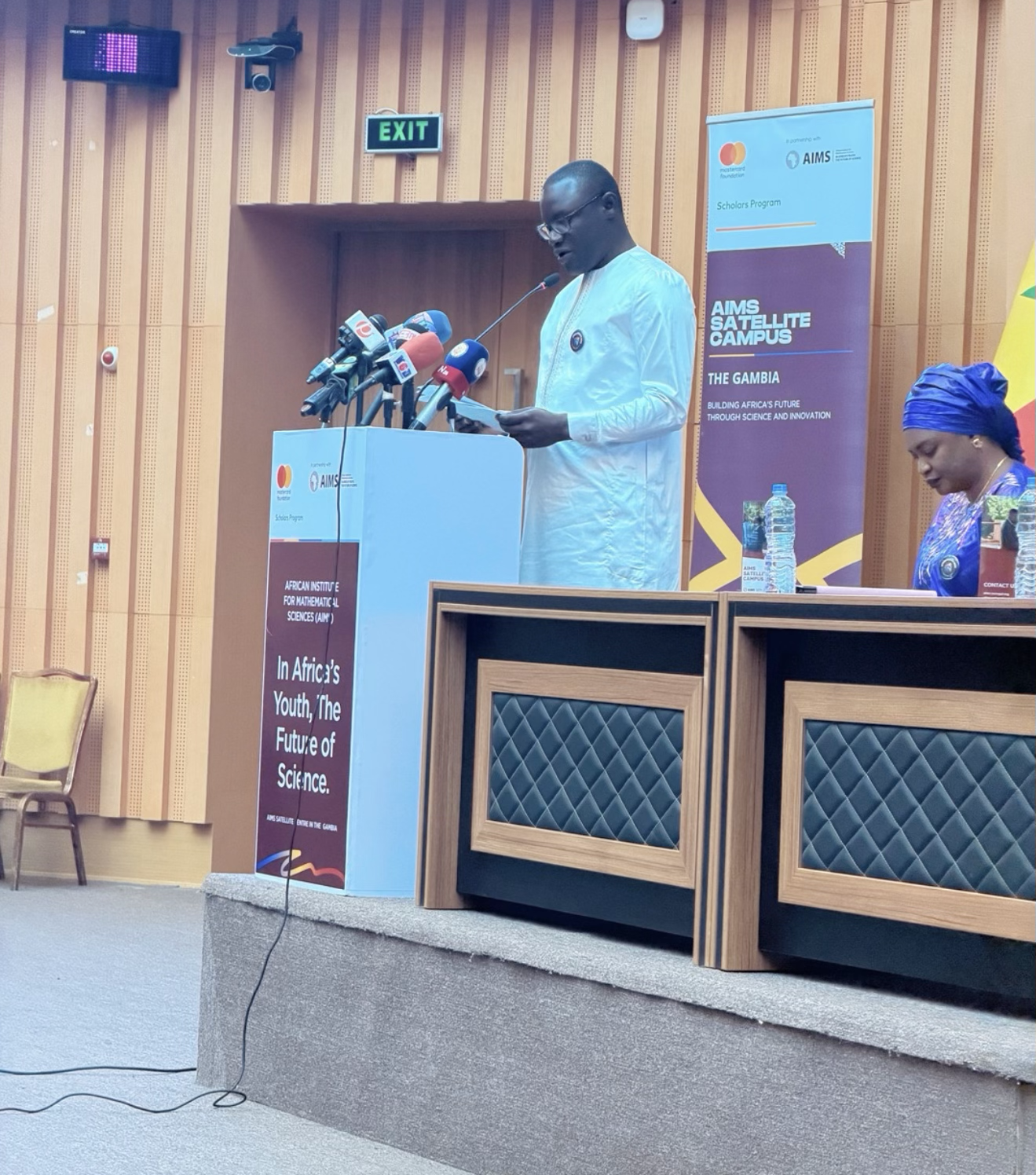
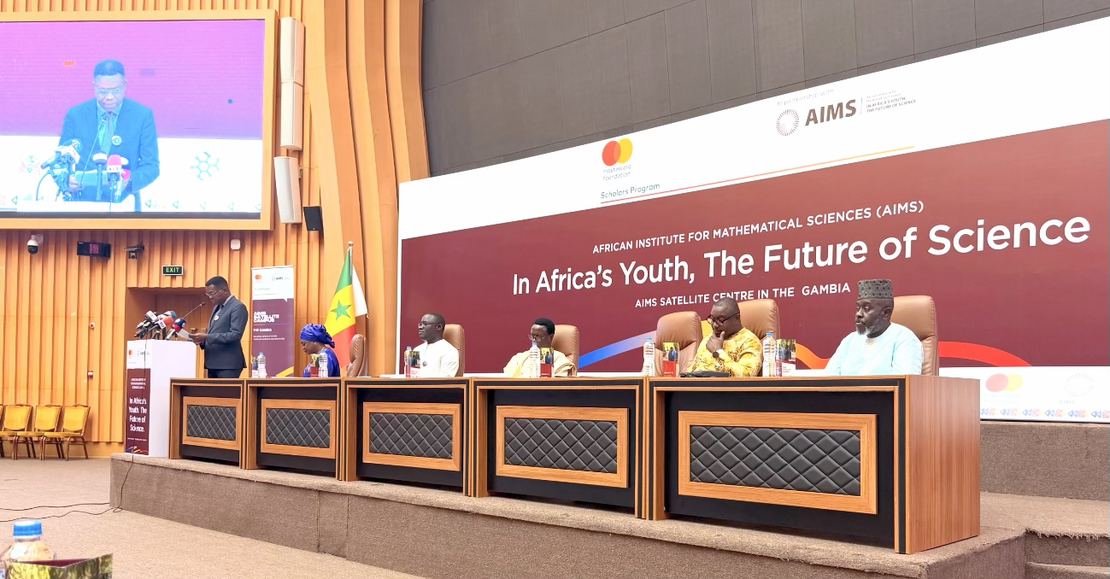
The Gambia has taken a major step towards strengthening its science, technology, and
innovation ecosystem with the launch of an AIMS Satellite Campus, initiated and led by AIMS
Senegal in partnership with the Ministry of Higher Education, Research, Science and Technology
(MoHERST) and the African Institute for Mathematical Sciences (AIMS) Network.
The new Satellite Campus aims to strengthen The Gambia’s national capacity in mathematical
sciences, data science, and artificial intelligence (AI) while expanding access to world-class
postgraduate education, research, and innovation opportunities for Gambian youth. The
initiative supports The Gambia’s Vision 2050 agenda and forms part of a long-term roadmap to
develop the satellite campus into a fully-fledged AIMS Centre of Excellence.
Operating under the academic leadership and strategic guidance of AIMS Senegal, the Satellite
Campus will leverage AIMS Senegal’s established programmes, faculty expertise, research
ecosystem, and international partnerships. Through this arrangement, Gambian students will
gain access to internationally recognised academic programmes and opportunities across the
wider AIMS Network, including AIMS centres in Rwanda and South Africa.
Beyond student training, the Satellite Campus will serve as a platform for talent development,
research collaboration, institutional strengthening, and innovation. University lecturers,
researchers, professionals, and secondary school mathematics teachers will benefit from
professional development opportunities, collaborative research initiatives, and access to
international scientific networks. The Satellite Campus will also support entrepreneurship and
innovation through mentorship, incubation, and technology transfer activities aimed at helping
young innovators develop solutions to local and regional challenges.
As part of its inaugural activities, the AIMS Satellite Campus will lead The Gambia’s participation
in Africa Science Week (ASW), AIMS’ flagship science engagement initiative. Africa Science
Week brings together students, educators, researchers, policymakers, industry leaders, and
members of the public to celebrate science, technology, and innovation and their contribution
to sustainable development.
The launch signals AIMS’ commitment to supporting The Gambia not only through advanced
education and research but also through public engagement, youth empowerment, and the
promotion of a vibrant scientific culture.
Speaking on the significance of the partnership, Prof. Pierre Gomez, Minister for Higher
Education, Research, Science and Technology, described the initiative as:
A strategic step toward building a resilient national science, technology, engineering and
mathematics (STEM) ecosystem. This initiative will empower Gambian youth with the advanced
scientific knowledge and skills needed to address complex local and global challenges, while
contributing meaningfully to national development and economic transformation.
Professor Mouhamed Moustapha Fall, President of AIMS Senegal, emphasized the importance
of regional collaboration in strengthening scientific capacity across West Africa.
The AIMS Satellite Campus in The Gambia reflects our commitment to expanding access to
world-class education in mathematical sciences, data science, and artificial intelligence. Under
the leadership of AIMS Senegal, this partnership will help build the scientific talent and expertise
needed to drive innovation, economic growth, and sustainable development, while
demonstrating the power of African institutions working together to strengthen the continent’s
knowledge economy.
Welcoming the launch, Professor Sam Yala, President of the AIMS Network, highlighted the
transformative role of science and innovation in Africa’s future.
We are delighted to welcome The Gambia into the AIMS Network. This partnership reflects our
shared belief that Africa’s future will be shaped by investment in science, innovation and young
talent. Together, we are building a new generation of African scientists, innovators and leaders
equipped to shape Africa’s future.