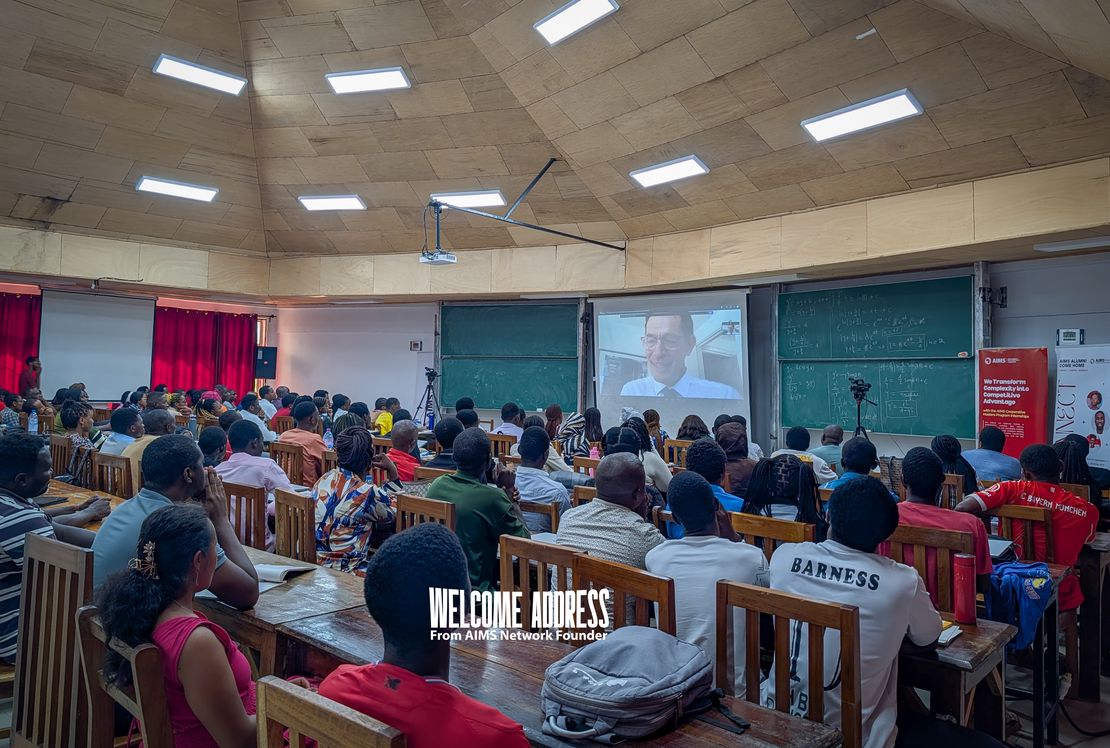
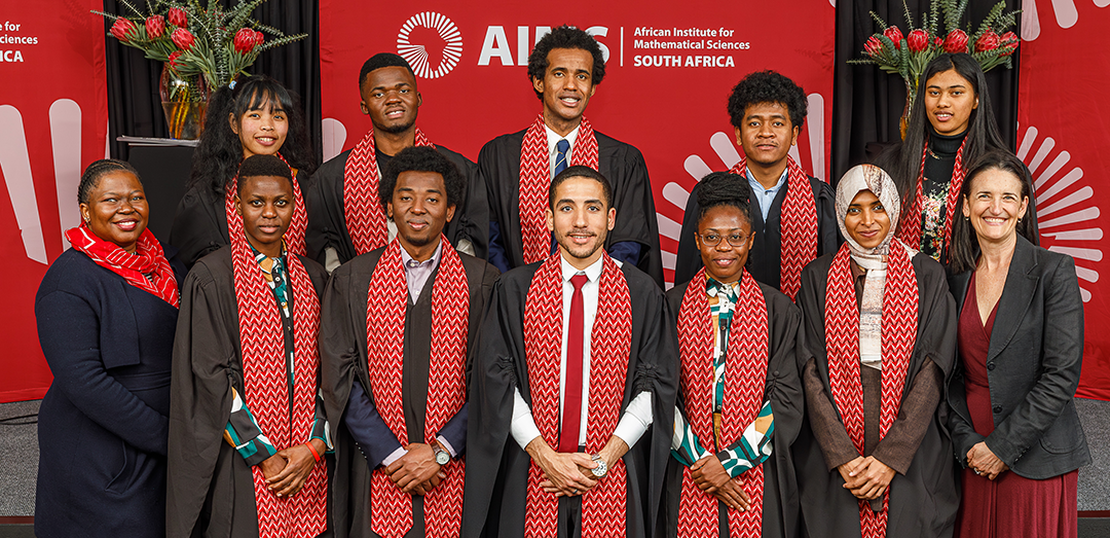
As students begin the 2026/2027 academic year across the African Institute for Mathematical Sciences (AIMS) Network, Founder Professor Neil Turok has challenged the new cohort to use their mathematical training to advance scientific discovery and help address Africa’s development needs.
At a welcome webinar hosted by AIMS Cameroon and moderated by Centre President Prof. Mama Foupouagnigni, Prof. Turok urged students to look beyond individual academic achievement and embrace the opportunities that come with joining a pan-African community of students, researchers, lecturers and alumni. Their journey at AIMS, he emphasised, should involve sharing knowledge, building relationships across centres and preparing to contribute to the generations that follow.
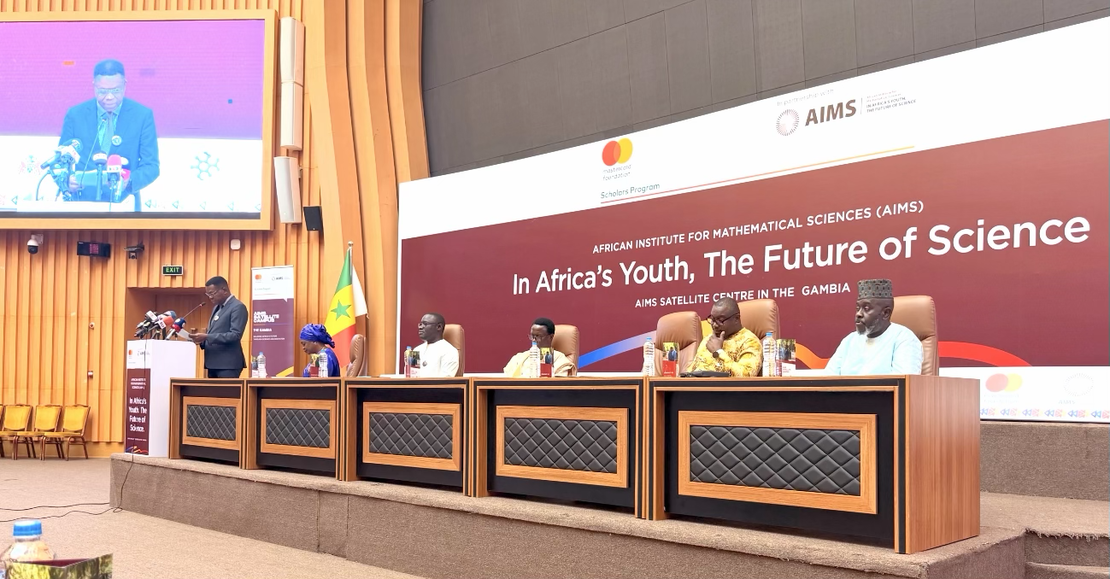
The future of science is in Africa’s youth,
he said.
That emphasis on connection produced a practical proposal during the discussion: a theoretical physics discussion group bringing together students from AIMS centres across Africa. Prof. Turok offered to help facilitate the initiative, which would create space for students to exchange ideas, explore research questions and develop collaborations beyond their own centres.
The proposal reflected a principle he returned to throughout the engagement: “Collaboration, not competition.”
For the 2026/2027 cohort, this approach places relationships alongside academic learning as an essential part of the AIMS experience. Students were encouraged to draw on the wider network’s expertise while considering how they could strengthen its programmes and contribute to its continued development.
Prof. Turok also told students that they were entering the mathematical sciences at a significant moment, with artificial intelligence increasingly influencing research, scientific communication and the production of knowledge.
Navigating that changing landscape, he argued, requires a deep understanding of fundamental concepts. He encouraged students to move beyond memorisation and develop the mathematical foundations needed to assess new developments critically, recognise connections and generate original ideas.
He also urged them to remain curious beyond the classroom, recommending publications such as Quanta Magazine as a way to follow contemporary scientific research.
Questions from students opened a discussion about choosing meaningful research problems. Drawing on examples from theoretical physics, cosmology and dark energy, Prof. Turok encouraged students to explore questions connected to observable phenomena and to think carefully about the evidence underpinning scientific ideas.
The conversation also considered how mathematical knowledge could contribute to addressing challenges facing African societies, including disease, energy shortages, malnutrition and environmental degradation. Students’ understanding of the contexts in which these challenges arise, he suggested, could offer valuable perspectives for research.
Alongside scientific expertise, Prof. Turok emphasised the importance of wisdom and responsibility, drawing on Nelson Mandela’s example to illustrate the qualities needed to put knowledge to constructive use.
Founded in South Africa in 2003, AIMS was established to rethink university education through excellence in the mathematical sciences. Prof. Turok connected that founding ambition to the opportunities now before the new cohort: learning through discovery, sharing knowledge and turning ideas into practical contributions.
Reflecting on his own motivation, he described how growing up in South Africa as the child of anti-apartheid activists shaped his belief in the continent’s potential and the importance of creating opportunities for talented young Africans.
He encouraged students to consider futures as researchers and lecturers in African institutions, helping to train those who will come after them. He also urged them to approach promising ideas entrepreneurially, developing clear plans and seeking the support needed to put them into action.
For the 2026/2027 cohort across the AIMS Network, his message connected the immediate demands of study with a longer-term responsibility: to deepen their knowledge, work across boundaries and help create opportunities for Africa’s next generation of scientists.